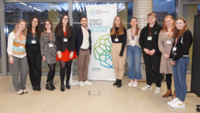
As part of my role as a pharmacology and physiology teaching assistant at the University of Aberdeen, I co-delivered two public engagement activities in March of this year. The first was a hybrid…
Proteolysis Targeting Chimeras (PROTACs) are heterobifunctional (two-headed) molecules that allow for highly selective targeted protein degradation (TPD). Contrary to traditional small molecule…
It is an early Friday morning and no one, except security, is at the Advanced Research Centre at the University of Glasgow - just me and a few other student volunteers, who are diligently preparing…
The number of Food and Drug Administration (FDA) approvals per $1bn spent on drug development halved every 9 years between 1950 and 2010 (Scannell et al., 2012). ‘Eroom’s Law’ was the term chosen to…
As researchers, we often invest countless hours in conducting research and analysing data. However, when it comes to sharing our findings with non-scientific audiences, we may face challenges in…
If there’s one thing that people remember from biology at school, it’s that mitochondria are the powerhouses of the cell. They’re not wrong – in fact, every day the average healthy human produces…
The meeting “Binding Kinetics and Mechanistic PK/PD Modelling in Early Drug Discovery” took place on 27-8 March 2023 at the Møller Institute in Cambridge, UK and it was a wonderful gathering for our…
Applications are open to become the next President-elect for the Society, as well as opportunities to join Council as the Industry Trustee and Clinical Trustee. These roles, which are open for…
The Medical Schools Council (MSC) and British Pharmacological Society (BPS) welcome the completion of an independent review of the Prescribing Safety Assessment (PSA). The PSA is a prescribing exam…
A hermit crab. Decapods include crabs, lobsters, crayfish, shrimp, and prawns. The Royal Society of Biology's Animal Sciences Group has put out a call for evidence to inform future policy…