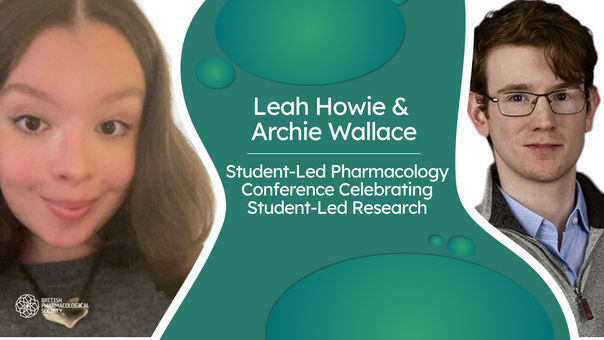
Much of the research carried out by pharmacology students, including undergraduate dissertations, goes unnoticed by the wider student network. We found ourselves only knowing what our classmates were working on if we were friends or working in the same research group. This is disappointing for those interested in current areas of world-changing pharmacological research happening, not just at the University of Glasgow, but across the UK. This was an area that the University of Glasgow Pharmacology Society could help with.
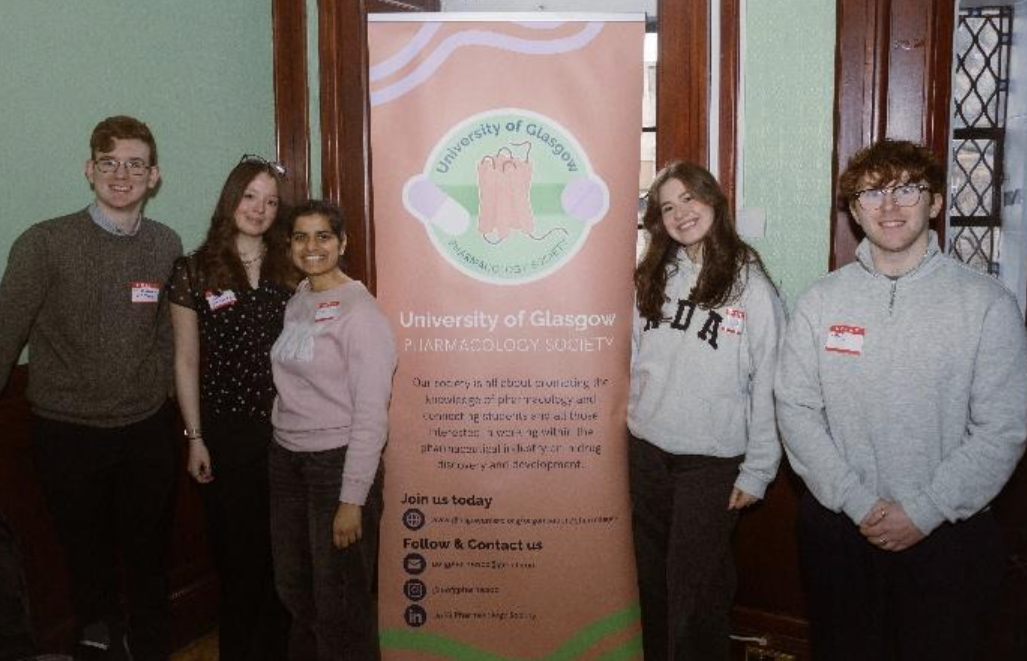
The University of Glasgow Pharmacology Society is a student-led society dedicated to promoting the knowledge of pharmacology and connecting those interested in the field through social and academic events. Our idea was to hold the Society’s first ever scientific conference. This conference would allow students to present research (across several fields) in an engaging and approachable way. Importantly, this allowed first and second year students to attend a conference and see where their degree can take them. This was an ambitious plan, as it was the first time the University of Glasgow Pharmacology Society society had hosted an event like this independently.
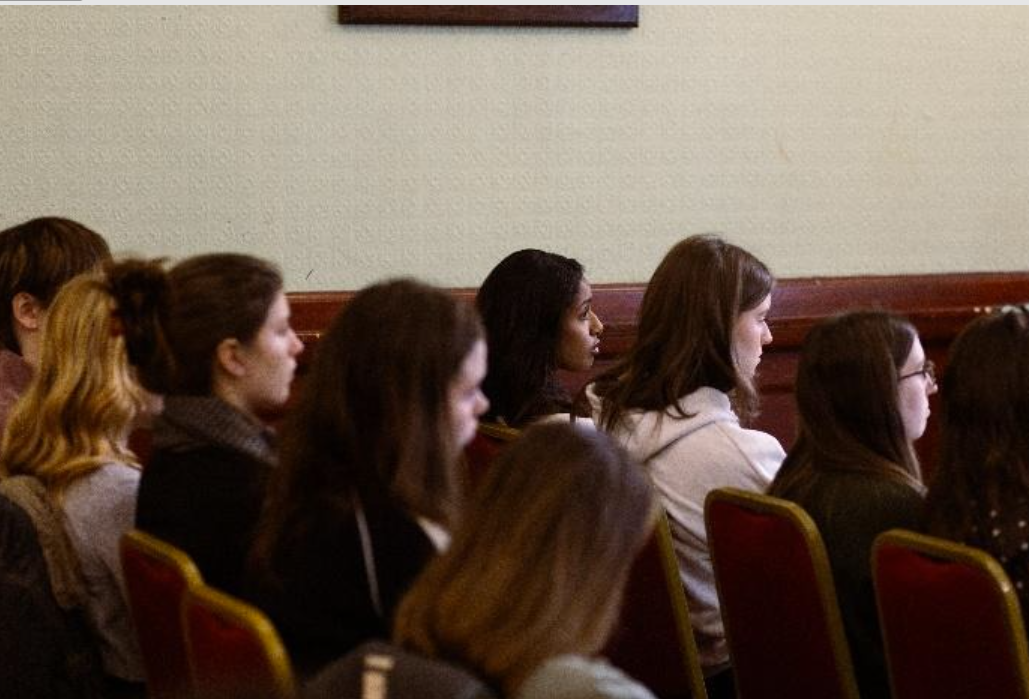
To remove barriers to the event, we kept tickets free to attend. To facilitate this and cover the costs of catering, advertisement (like printing, a photographer, and a poster) and room booking fees, the Society needed to source funding. The conference was supported by a Club Grant from the University of Glasgow’s Student Representative Council (SRC) which aims to support and elevate student-led initiatives that create more inclusive, accessible, and engaging opportunities for the wider student community.
We also established a link to a project run by the College of Medical, Veterinary and Life Sciences entitled "A home from home: increasing belonging and engagement sense of belonging". This is supported by a grant from the Learning and Teaching Development Fund set on encouraging student society events to be held within the working day, making them more accessible to home students. This was a win-win for us: receiving additional key funding whilst widening participation to those who may not have been able to attend the event if it had been held at night, when most socials occur.
Thanks to some careful planning, the conference went very smoothly. We had a small poster display set-up allowing four third-year students to discuss their literature review findings. Catering was provided and, it’s safe to say, went down very well! We invited speakers across a range of subjects including fourth-year student Ava Mcelhinney who presented her dissertation investigating patient preferences in drug choices for Alzheimer’s disease. We both presented talks as well, with Leah talking about her research on novel peptide-based precision oncology therapies, and Archie discussing free fatty acid receptors and public engagement in pharmacology. We also invited Dr Elaine Duncan, a postdoctoral research assistant in the Milligan Group at the Centre for Translational Pharmacology. She provided invaluable insights into her career, giving final year students a glimpse into what an academic career can look like.
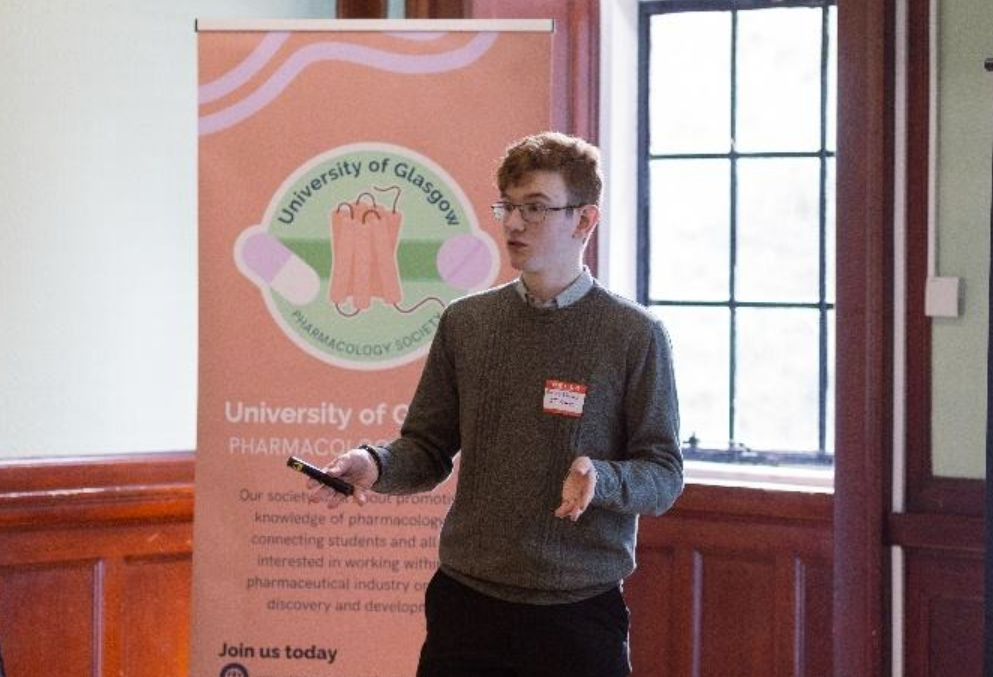
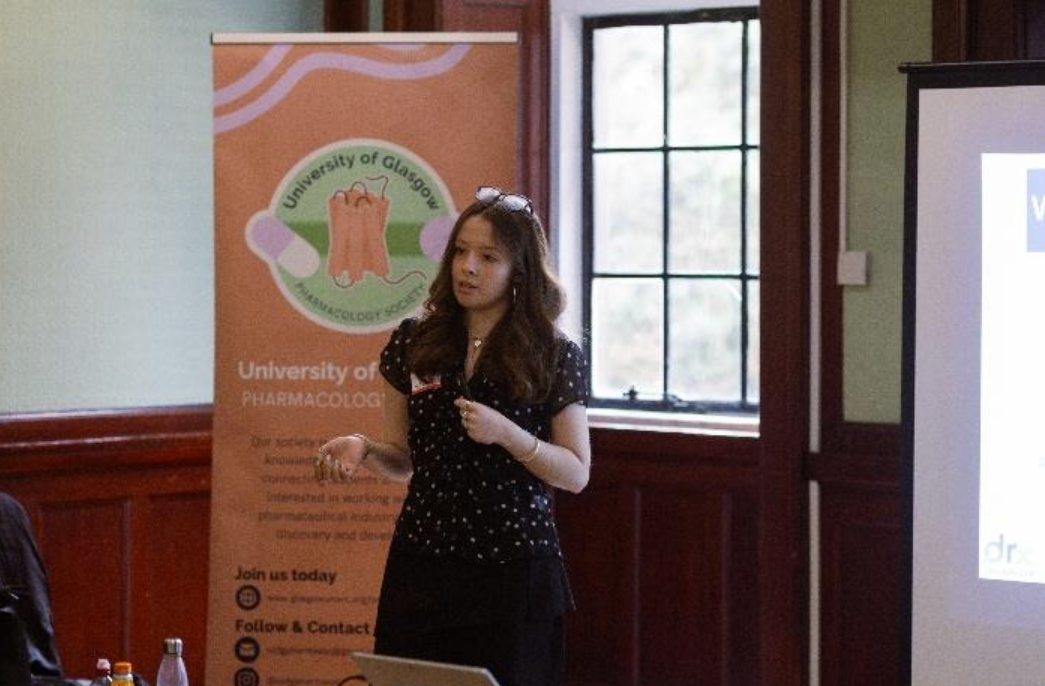
Since this was our first conference, feedback was vital from attendees, staff and speakers. We had a lower turnout than we were expecting, despite selling 40 tickets only 25 people attended. All those that completed the feedback form strongly agreed it was easy to attend the event, the content was engaging and it increased their understanding of current pharmacological research. Excitingly, they would attend a similar event in future, especially if held during the day.
Although delighted with this, there is always room for improvement, and we have learnt several lessons from our first conference. Firstly, the balance of speakers in the sessions was not quite right. We had one session before lunch with an introduction to the conference, a talk from our sponsors and a presentation. Similarly, after lunch we had one session, but this session had four presentations. We agreed that for our next event there should be a more balanced split, with a tea/coffee break rather than a lunch break. It would also reduce the need for such a high budget, which may be beneficial if funding is not available. By far the biggest downside to this, our first event, was the attendance which was lower than expected. We could have advertised the event more widely, but we felt that targeting pharmacology students via Instagram and course-leader outreach was the best way to go for our first event. Although small to start with, this is something we can build on for years to come.
Conclusion
Overall, our first Pharmacology conference went very well. By far the best thing to come out of the conference was the increase in society membership. By mostly restricting it to members only, we encouraged people to sign-up to our (free) membership. This, in turn, gives more power to our mailing lists and membership base, which can be used to advertise events and build our society. The society is already planning another conference for 26/27, and we think, with a couple of improvements, it can be a sustainable event that celebrates and shares student-led pharmacological research.
Acknowledgements:
We would like to thank all those who contributed to the conference including the speakers, attendees, and those who brought posters. We would also like to thank our funders the University of Glasgow’s SRC and the College of Medical, Veterinary and Life Sciences with a special shout out to Dr Kenneth Watterson for helping us secure the grant. Thanks also to the Glasgow University Union for hosting the event and to all the members of the University of Glasgow Pharmacology Society committee, we couldn’t have done it without you!