
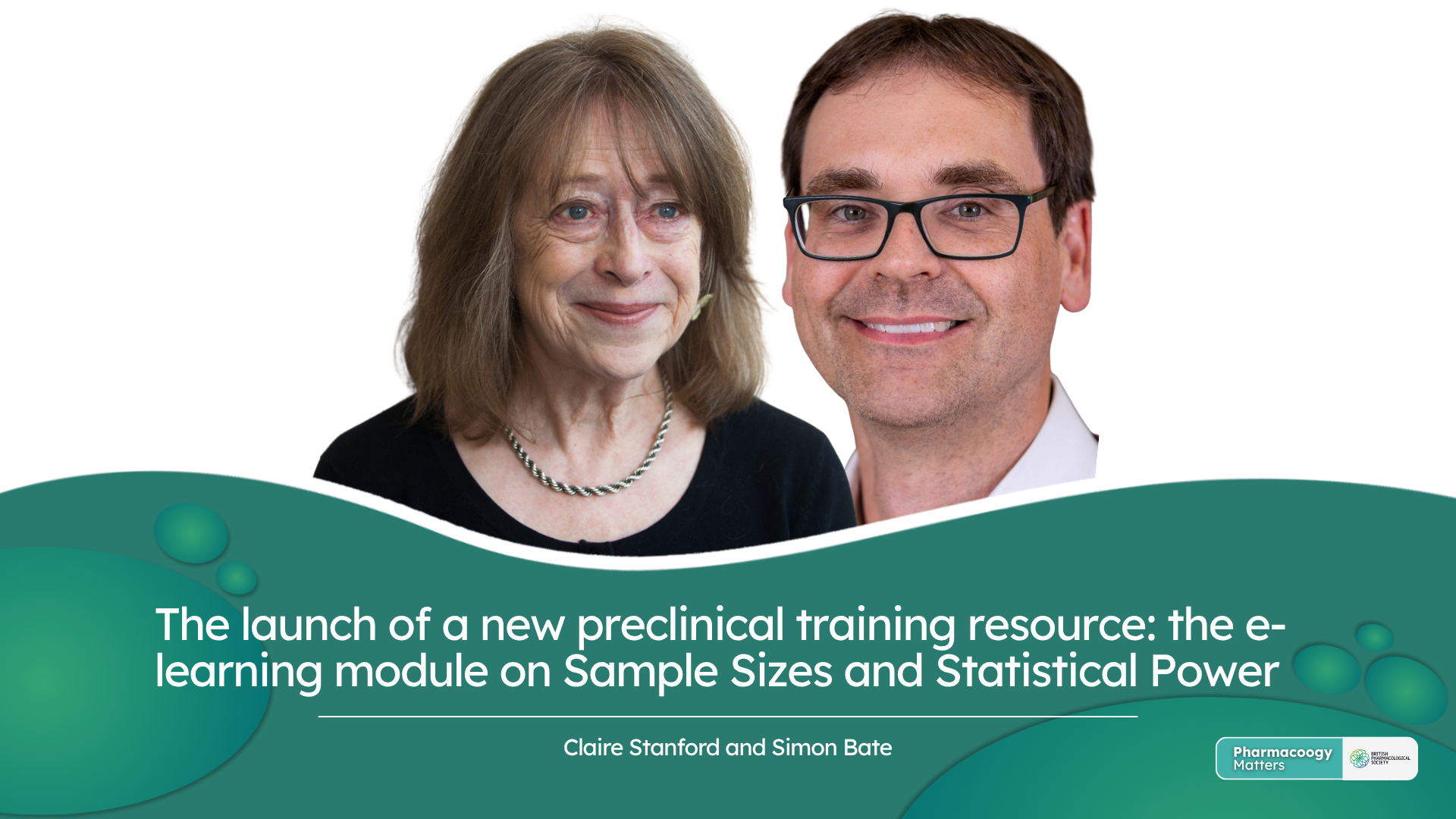
The launch of a new preclinical training resource: the e-learning module on Sample Sizes and Statistical Power
The British Pharmacological Society (BPS) is pleased to announce the launch of another e-learning module in the series devoted to the design and analysis of preclinical experiments. This new resource ‘Sample Sizes and Statistical Power’. explains the importance of selecting an appropriate sample size, the factors influencing its calculation, and the tools available to determine it.
What exactly does this new resource cover?
As before, this new resource on Sample Sizes and Statistical Power starts by outlining the specific learning objectives for this module. These are followed by a series of four videos of explanatory slides with a narration, which cover the following points:
- What influences sample size and why is that important?
- The importance of effect size and statistical power
- Factors that increase the risk of false positives and false negatives
- Using a statistical package to calculate an appropriate sample size
- Power curves and how to interpret them
- Identifying nested designs and assessing replication of samples (and findings) within and between groups of animals
Every video is followed by a set of formative MCQs, which enable users to assess their understanding of each aspect of the resource. The whole exercise will take about 2h to complete, but this can be achieved in separate steps.
After completing this module, users should understand:
- Why it is important to select an appropriate sample size for your confirmatory experiments
- What influences sample size
- What is meant by Statistical Power and to appreciate the implications of running over- and underpowered experiments
- How to calculate sample sizes for various effect sizes
- That there can be multiple sources of variability and why it is important to investigate the various levels of replication in an experimental design
What other complementary resources have been developed?
Other resources in the series include: ‘Blinding’; the ‘Experimental Unit’; and ‘Types of Experiment’. Appreciation of the importance and need for each of these aspects of experimental design will help to strengthen the reproducibility and reliability of preclinical research findings, which is essential for their successful translation into safe and effective medicines. Their main objective is to help users move beyond simple ‘rules of thumb’ and make well-justified decisions about study design.
All these resources are intended to be used by educators, early career researchers, taught Masters’ and undergraduate students when making decisions about the factors that should be considered when designing an experiment. They can be used either as free-standing modules, or as supplements to other course materials. They can also help develop the critical thinking needed for appraisal of experimental procedures described in original research reports.
Where do I find the resources?
As with all others in the series, this resource is freely available on the BPS Assessment platform (https://www.bpsassessment.com/). Only your email address is needed to create a new user account on the platform. Having registered and accessed the educational resources on that site, scroll through the collection to find the preclinical resources that have been developed so far. Clicking on any of those will enable you to access and start interacting with the module.

Who developed the resource?
This resource was developed by Clare Stanford (a pharmacologist) and Simon Bate (a biomedical statistician). As with others in the series, this module was subject to extensive external peer review by a wide range of experts in the field before publication. The final versions of both resources took account of all their helpful input.