Balancing Urgency and Protection in Drug Research during Public Health Emergencies – The Ebola Case in DRC and Uganda
Josephine Nayiga, Catriona Waitt, Provia Ainembabazi, Stephen Okoboi and Barbara Castelnuovo
Infectious Diseases Institute, College of Health Sciences-Makerere University-Bioethics Working group
On 17th May 2026, the World Health Organization declared the ongoing Ebola outbreak in the Democratic Republic of Congo (DRC) and Uganda, a Public Health Emergency of International Concern (PHEIC). The outbreak is caused by the Bundibugyo strain of Ebola virus, a strain for which there have only been two prior recorded outbreaks (in 2007 and 2012) and for which there is currently no licensed vaccine and no approved specific therapeutic agent (WHO, 2026). What began as an outbreak in eastern DRC has since spread across multiple provinces and crossed into Uganda through imported cases, highlighting the challenges of responding to highly infectious diseases in a region characterized by porous borders, population mobility, insecurity, and fragile health systems.
As of 7 September 2026, a cumulative total of 6778 confirmed case has been reported: 6757 in the Democratic Republic of the Congo, 20 cases in Uganda (15 imported from DRC and 5 locally transmitted) and one case in France. Overall, 3269 deaths have been reported, including two in Uganda. As of 7 September, at least 1611 patients had recovered, including 1590 in the Democratic Republic of the Congo, 18 in Uganda, two in Germany and one in France. (WHO, 2026). The public health authorities often struggle with limited diagnostics, delayed case detection, gaps in contact tracing, rebel attacks on healthcare infrastructure, and persistent community mistrust. The outbreak may have been circulating for weeks before being identified, allowing transmission to become established before large-scale response measures were initiated.
This outbreak ignites important discussions about the ethical conduct of research during public health emergencies. As pharmacologists, scientists, regulators, and public health authorities seek effective vaccines and therapeutics against Bundibugyo Ebola virus, they must navigate a delicate balance between the urgent need for evidence and the obligation to protect research participants and affected communities. This raises a fundamental question: How much evidence is enough when communities urgently need interventions, but the science remains uncertain?
Outbreaks create extraordinary pressure to accelerate research and access to investigational interventions, yet this urgency must not compromise the ethical principles that safeguard human dignity, participant welfare, and public trust.
The ethical imperative to conduct research
During outbreaks, research is not a luxury but a public health necessity (WHO, 2020). Without research, there can be no evidence to support the development of diagnostics, therapeutics, vaccines, or public health interventions. Yet outbreak research differs significantly from routine clinical research. Decisions need to be made quickly, often in settings where mortality is high, healthcare systems are strained, and the social environment is characterized by vulnerability, fear, and uncertainty.
The current Ebola outbreak illustrates this dilemma clearly. Unlike Zaire ebolavirus, for which vaccines and monoclonal antibody treatments have been developed over the past decade, the Bundibugyo ebolavirus remains relatively neglected. There are currently no licensed vaccines, approved therapeutics, or rapid diagnostic tools specifically designed for this strain. In response, the WHO advisory groups have been considering several candidate products that were promising enough to warrant prioritization for evaluation in clinical trials and working closely with the governments of the Democratic Republic of the Congo and Uganda to facilitate the implementation of research evaluation of these products (WHO, 2026). On 7 August 2026, the WHO Technical Advisory Group on candidate vaccine prioritization recommended that Ervebo, the only licensed Ebola vaccine, be prioritized for evaluation in a randomized clinical trial during the ongoing outbreak. However, following a review of additional evidence on 19 August 2026, WHO’s Strategic Advisory Group of Experts on Immunization (SAGE) concluded that evidence remains insufficient to support the programmatic use of Ervebo for BVD, as its efficacy against BVD in humans remains unknown (WHO, 2026).
There is an urgent need for research to generate potential candidate vaccines. However, researchers, regulators, public health authorities, and communities must navigate complex ethical issues while attempting to generate this evidence. The key ethical and practical challenges associated with conducting Ebola vaccine research are summarized in the infographic below. These include considerations related to participant protection, fair inclusion, ethical and regulatory oversight, community engagement, equitable access, and the broader operational challenges of conducting research during an outbreak.

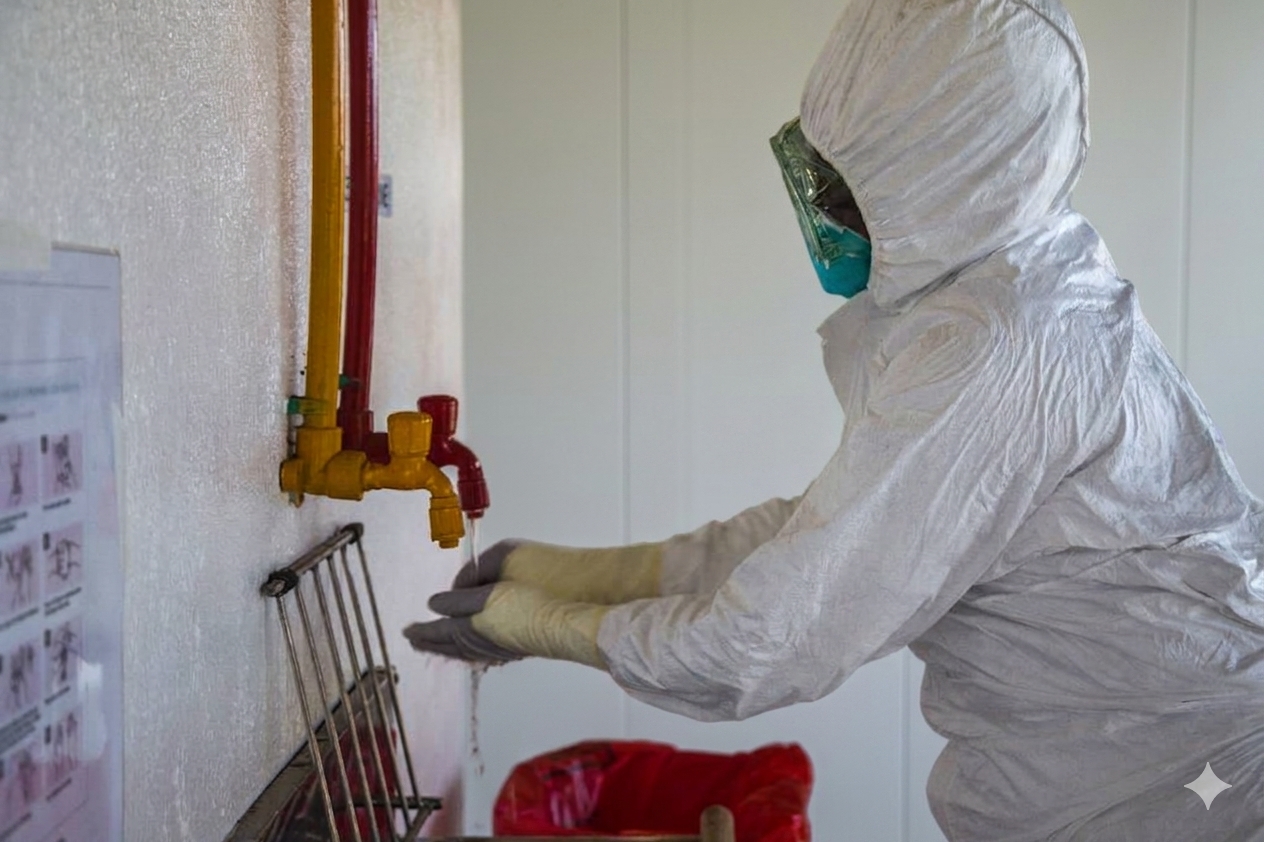
Photo 1: Necessity of strict use of personal protective equipment in an outbreak, also illustrating the reason communication can be difficult with a healthcare worker or researcher wearing such equipment.
When the Risk-Benefit balance becomes uncertain
The principles of beneficence (maximizing benefits) and non-maleficence (minimizing harm) are central to any research. Beneficence, a key foundational principle of research ethics requires that the anticipated benefits of any study should justify its risks (Belmont report, 1979, CIOMS 2016).
However, during an outbreak, both risks and benefits may be poorly understood, and the urgency of the outbreak should never justify exposing participants to unreasonable risks. Conversely, the desire for non-maleficence must not mean that priority groups are excluded from research. The complexity of these decisions is often amplified during an outbreak of a high-consequence pathogen.
The candidate vaccines may have shown promise in laboratory studies or animal models, yet human data may be limited. At the same time, participants face the very real risk of infection, severe illness, or death from Ebola itself. In such circumstances, traditional approaches to risk-benefit assessment may become difficult to apply.
The urgency of the outbreak creates pressure to accelerate research and regulatory approvals. Communities may be willing to accept greater uncertainty in exchange for access to potentially beneficial interventions. Researchers may feel compelled to move faster than usual. Regulators may face demands for rapid decision-making.
The ethical challenge is ensuring that urgency does not replace scientific rigor.
History has repeatedly shown that health interventions deployed without adequate evidence of safety, efficacy, and effectiveness can lead to unintended harms, wasted resources, and erosion of public trust in science and public health institutions. During the COVID-19 pandemic, for example, the widespread promotion of hydroxychloroquine and other unproven therapies such as ivermectin generated confusion, diverted attention and resources away from evidence-based interventions, and contributed to public skepticism regarding scientific and public health recommendations (Taccone 2022) Ethical challenges similarly encountered during Ebola outbreaks in West Africa and the Democratic Republic of Congo highlighted the need to balance rapid access to potentially beneficial interventions with the generation of robust scientific evidence through well-designed research (Calain, 2018, WHO, 2016) before large-scale implementation of interventions, particularly during public health emergencies when pressure for rapid action is greatest.
The regulatory system under pressure
Public health emergencies place extraordinary demands on regulatory systems. Although Uganda has made significant progress in strengthening research governance/regulation through the Uganda National Council for Science and Technology (UNCST), the National Drug Authority (NDA), and Research Ethics Committees, the outbreaks expose challenges that routine regulatory systems are not always designed to address. The guidelines on research in outbreaks may not be comprehensive enough to offer clear and practical guidance to researchers.
As a result, several critical questions emerge regarding;
- Compassionate use of investigational interventions: Under what circumstances should unlicensed vaccines or therapeutics be offered outside clinical trials, and how can humanitarian access be balanced with the need to generate robust evidence through well-designed research? What safeguards should be in place for informed consent, safety monitoring, equitable access, and systematic data collection?
- Emergency authorization of investigational products: How can vaccines, therapeutics, and diagnostics be approved for urgent use while ensuring safety and adequate evidence? Despite the existence of mechanisms such as the WHO Monitored Emergency Use of Unregistered and Experimental Interventions (MEURI) framework, the question remains on the preparedness of the affected countries to operationalize them during outbreaks, including requirements for ethical oversight, informed consent, safety monitoring, and data collection.
- Accelerated ethical review processes: Can review processes be fast-tracked without weakening participant protection and informed consent? Although joint review mechanisms and regional initiatives such as the African Vaccines Regulatory Forum (AVAREF) have demonstrated the potential to shorten review timelines, questions remain regarding the readiness of countries to operationalize these approaches rapidly and consistently during public health emergencies while maintaining robust ethical oversight.
- Research preparedness and pre-approved protocols for outbreak response: Can researchers prepare “ready-to-activate” protocols, so research starts early in an outbreak rather than after the peak has passed? Are governments/funders willing to support such protocols?
- Adaptive and platform trial designs: How should ethical and regulatory frameworks respond to innovative trial designs that allow modifications based on emerging evidence or evaluate multiple interventions under a single protocol?
- Cross-border data and sample sharing: How can cross-border collaboration be enabled while protecting ownership, privacy, and benefit sharing?
- Governance of genomic surveillance research: Are ethical and regulatory safeguards needed to govern the collection, analysis, storage, and sharing of pathogen genomic data in place?
- Post-trial access to successful interventions: How can communities that participate in research gain access to proven interventions after studies end?
The current Ebola outbreak spans multiple jurisdictions and requires coordination among national authorities, international partners, and research institutions. Harmonizing regulatory requirements while maintaining participant protections remains a significant challenge.
The outbreak therefore highlights the need for stronger emergency research preparedness frameworks before, and not during, the next crisis.
Community mistrust: The invisible barrier to research
While scientific uncertainty presents one challenge, community trust presents another.
One of the most significant obstacles to outbreak control in both current and previous Ebola epidemics has been community mistrust. Reports from affected regions have documented resistance to public health interventions, attacks on health facilities, and widespread misinformation regarding Ebola and response efforts. Public health officials continue to identify mistrust as a major factor affecting case detection, contact tracing, and healthcare-seeking behavior.
Research activities are often viewed through the same lens.
Communities may ask:
- Why are experimental medicines being tested during a crisis?
- Why are vaccines being developed from foreign countries and not in the affected countries?
- Are affected populations being used as research participants for the benefit of others?
- What happens to collected blood and biological samples?
- Will the results be shared with participants and the communities?
- Who owns the resulting data?
- Will communities benefit if a successful intervention is developed?
Additionally, many communities still believe the outbreak is a political move, for governments to get foreign aid. Others say the disease comes from the lab as a bio-weapon; that the vaccination is more harmful than the virus; that there is a simple cure that is being concealed; that the disease is not real. Big Pharma is mentioned either as the profiteer of the crisis or as the ones who originated it (Sandner, 2026). These questions are not merely products of misinformation but they reflect legitimate concerns about equity, historical experiences, and transparency.
Meaningful community engagement must therefore be viewed as a core ethical requirement rather than a procedural obligation. Community trust cannot be established through informed consent documents alone. It requires continuous dialogue, transparency, and genuine partnership with affected communities. Given the predictable recurrence of viral haemorrhagic fever outbreaks in the currently affected region, such community relationships should be nurtured and maintained between outbreaks wherever possible; however, this requires ongoing resource and manpower.
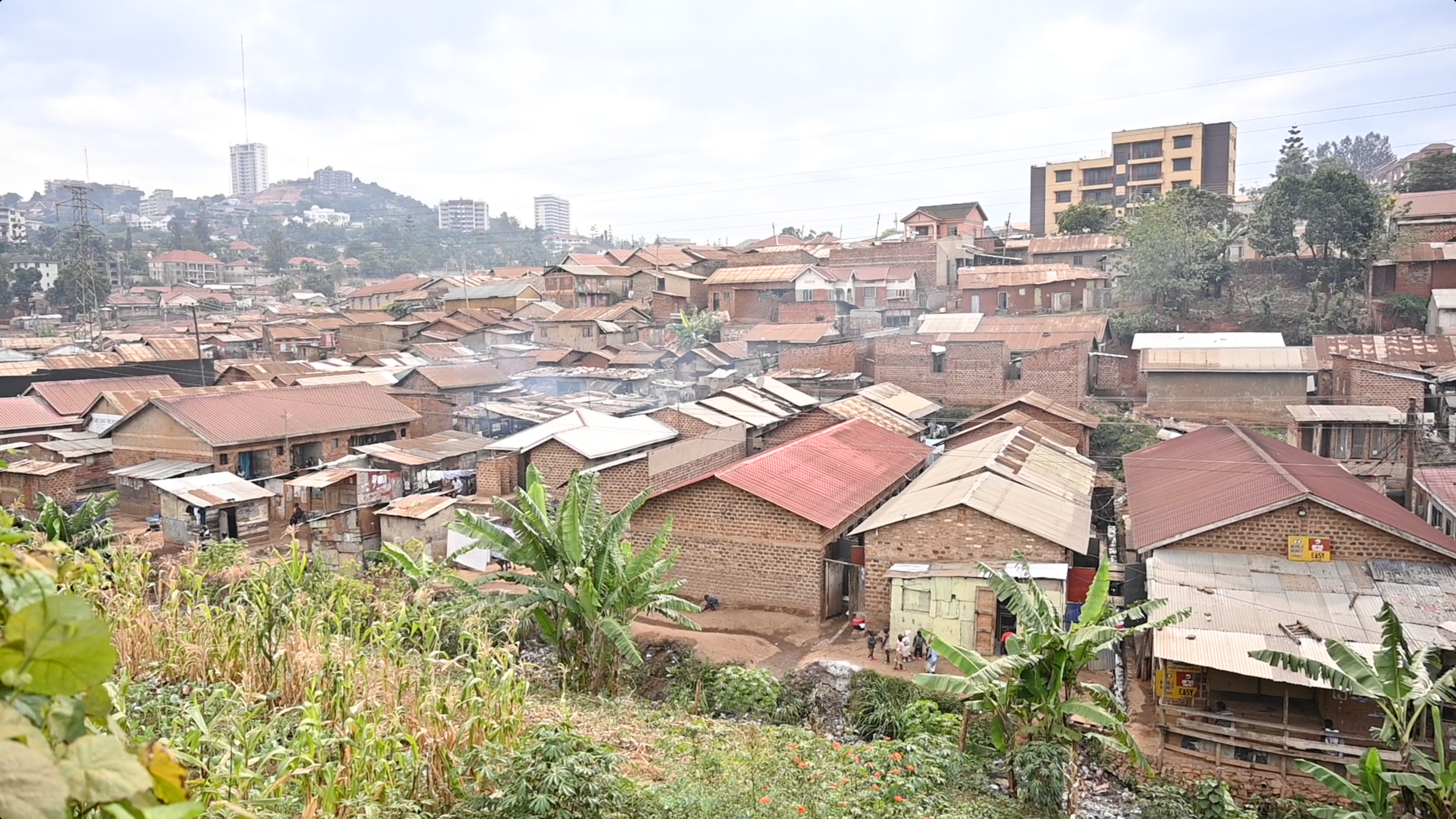
Photo 2: Illustrating a typical urban informal settlement where outbreak containment is particularly challenging
Knowledge gaps and continued exclusion of specific populations from research in emergencies.
The current outbreak also exposes longstanding gaps in outbreak research. Despite decades of experience responding to Ebola and other emerging infectious diseases, important specific populations continue to be underrepresented in clinical research. Pregnant and lactating women, children, older adults, and individuals with comorbid conditions have often been excluded from early clinical research. While intended to protect these populations, the result is an ethical paradox: populations excluded from research for protection are often the same populations with higher mortality rates and who could benefit more when emergencies occur.
Substantial knowledge gaps remain regarding;
- Long-term safety of investigational interventions: There is still insufficient evidence on delayed adverse effects or long-term health outcomes following exposure to these interventions. This limits the ability to fully assess risk–benefit profiles beyond the immediate outbreak period, particularly in survivors requiring long-term follow-up
- Pharmacokinetics and pharmacodynamics in specific populations: Little is known about how investigational products are absorbed, distributed, metabolized, and eliminated in these populations. This may affect dosing, efficacy, and safety, creating uncertainty about optimal treatment strategies during outbreaks
- Drug interactions in outbreak settings: The affected patients often receive multiple medications, including treatments for underlying conditions and supportive treatments. However, evidence on potential interactions between investigational interventions and commonly used drugs remains limited, increasing the risk of reduced efficacy, toxicity, or unexpected adverse events
- Long-term outcomes among survivors: Research has largely focused on immediate survival and clinical recovery, with less attention given to long-term physical, neurological, and functional outcomes. Understanding the lasting effects of both the disease and its treatment is critical for improving survivor care and informing future outbreak responses
- Social and psychological consequences of experimental interventions: Participation in studies involving investigational products may have lasting social and psychological effects, including anxiety, stigma, misconceptions about treatment efficacy, and mistrust of healthcare systems. More research is needed to understand these impacts and develop strategies to support participants and affected communities.
These evidence gaps force clinicians, researchers, regulators, and policymakers to make decisions under conditions of uncertainty, often relying on limited data to guide the use of investigational interventions in populations most affected by the outbreak The persistence of these gaps during the current Ebola outbreak underscores the need for more inclusive research approaches, stronger outbreak research preparedness, and the systematic collection of long-term safety and effectiveness data. Generating robust evidence during and between outbreaks is essential to ensure that future emergency responses are informed by science rather than uncertainty.
Beyond Clinical Trials: Justice and Benefit Sharing
Research ethics does not end when a protocol is approved or a trial concludes.
Communities affected by Ebola contribute significantly to scientific advancement through participation, data sharing, and sample donation. Justice requires that they share fairly in the benefits that emerge from that research.
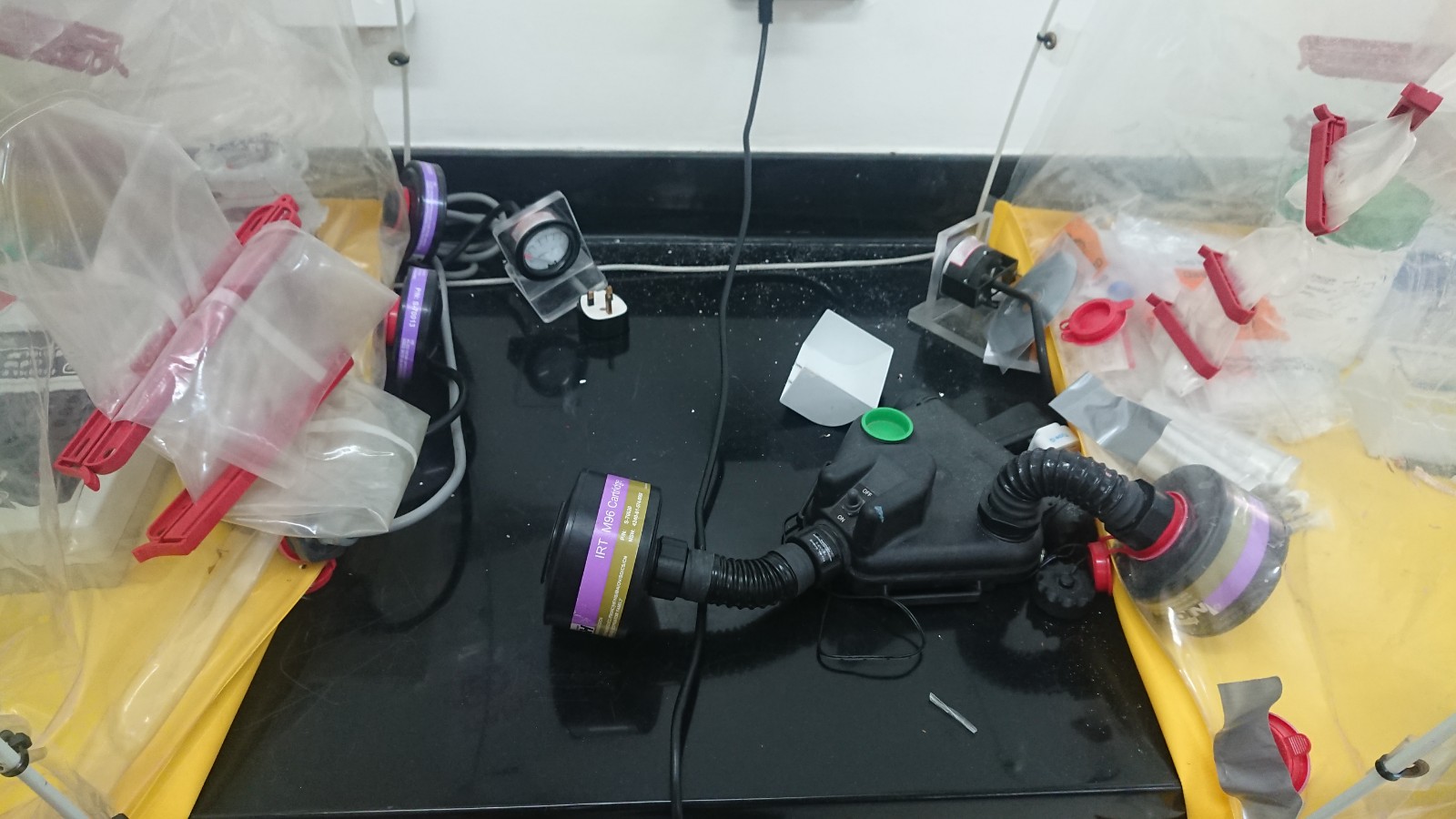
Photo 3: Rapid Containment Kit to enable safe sample handling in a hot zone
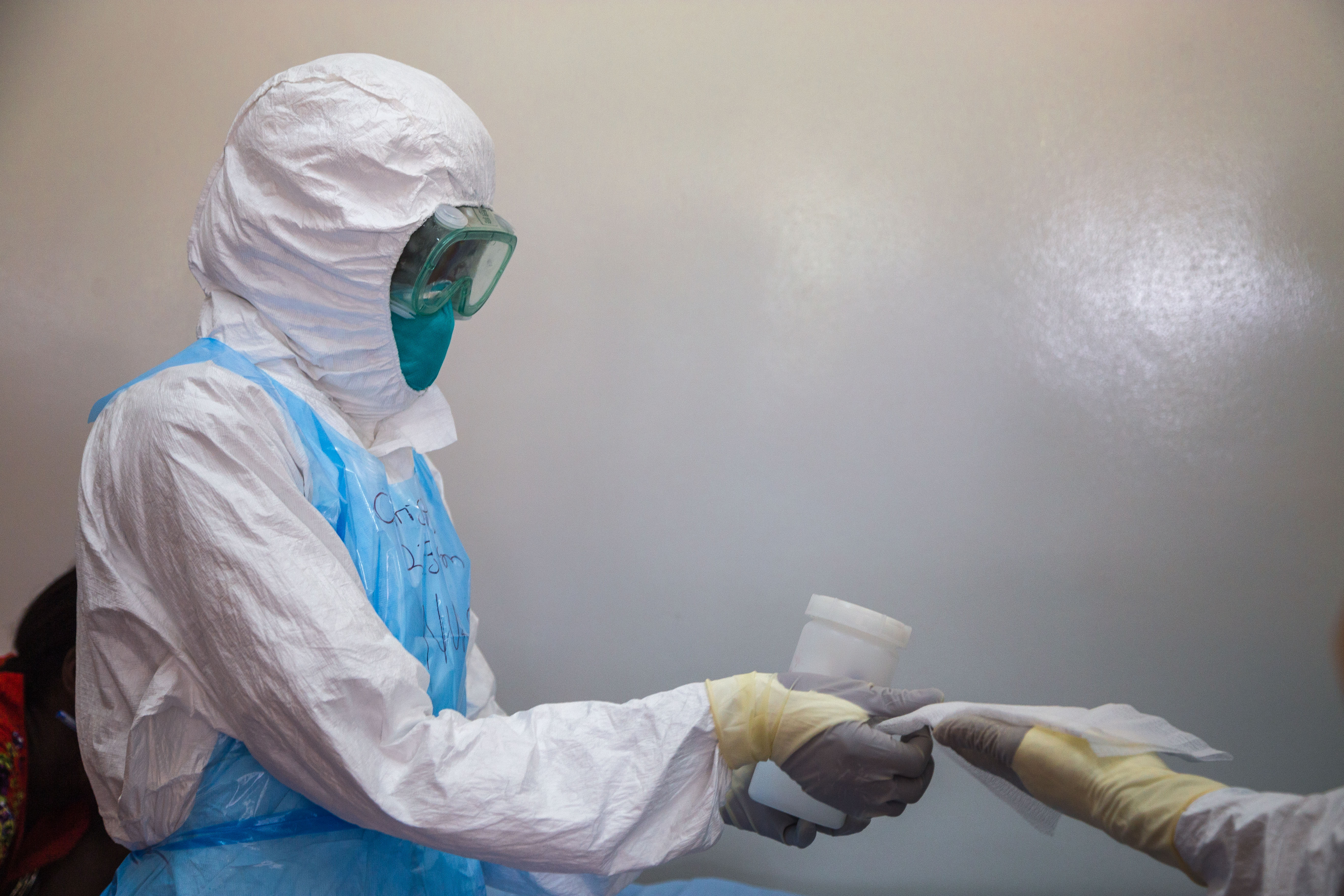
Photo 4: Challenges in sample decontamination in outbreak
Important questions remain:
Will successful interventions be affordable and accessible in affected countries?
Will local scientists be recognised as equal research partners?
Will local institutions strengthen their capacity as a result of outbreak research?
Will communities receive feedback on findings generated from their participation?
The current outbreak highlights the importance of moving beyond extractive models of research toward approaches grounded in equity and solidarity.
Looking Forward
The Ebola outbreak in DRC and Uganda is more than a public health emergency. It is a test of our ethical, scientific, and regulatory preparedness.
The absence of approved medical countermeasures for Bundibugyo ebolavirus demonstrates the consequences of under-investment in research for diseases that primarily affect low-resource settings. At the same time, the outbreak reminds us that scientific innovation alone is insufficient.
Successful outbreak research depends on robust regulatory systems, meaningful community engagement, transparent governance, and a commitment to justice.
As scientists continue to advance the development of new therapeutics and vaccines, equal attention must be paid to the ethical frameworks that govern their evaluation and use. The question is not whether research should occur during outbreaks—it must. The challenge is ensuring that, even under immense pressure, urgency never outweighs the obligation to protect the people and communities that make research possible.
Photo credits: We thank Peter Waitt for the photographs, for which all healthcare workers had provided verbal consent for photography.
AI Assistance was utilised in the generation of the infographic