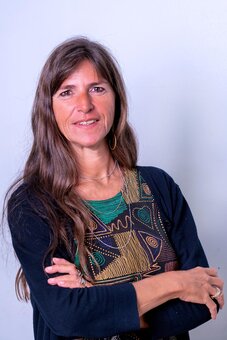

Dr Maheen Wahid is a medical doctor and final year PhD researcher at the University of Strathclyde.
She completed an MBBS and MPhil in Pharmacology in Pakistan, followed by an MSc in Advanced Pharmacology at the University of Strathclyde, UK.
Her current research focuses on investigating the role of HMGB1 in skeletal muscle biology and ageing-related dysfunction, combining experimental and translational approaches to better understand age-associated disease.
Tiny Fish, Big Discoveries: Exploring Ageing with the Killifish Model
A major challenge in pharmacology and biomedical research is modelling complex, ageing-related conditions in ways that are both biologically meaningful and ethically responsible. Traditional mammalian models, such as mice and rats, are often limited by long lifespans and high costs, making it difficult to study age-associated conditions efficiently. The African turquoise killifish, the shortest-lived vertebrate with a lifespan of just 4-6 months, offers a unique solution. This species exhibits many of the hallmarks of ageing seen in humans, making it particularly relevant for studying age-related disease (Figure 1). Its naturally compressed lifespan allows researchers to investigate ageing and disease progression over a practical timeframe while also supporting more sustainable and ethical research practices.
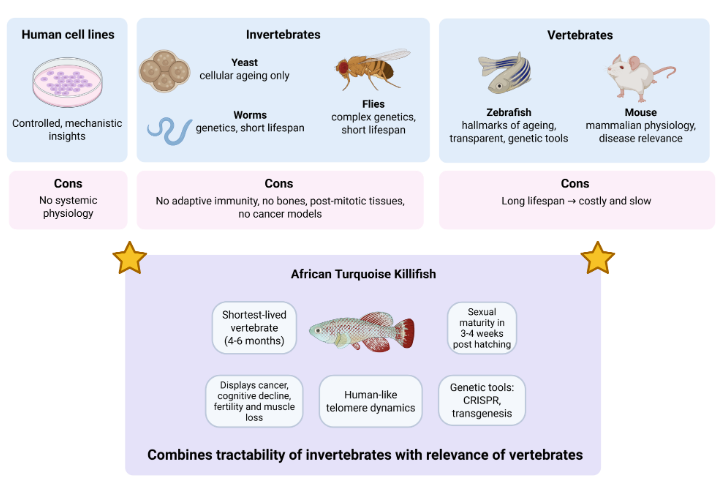
Figure 1: African Turquoise Killifish versus canonical ageing models.
My PhD research has focused on the African turquoise killifish as an alternative model to study ageing and age-related conditions. This work began with early collaborations with Dr James Murray from Swansea University, which helped me gain the training and experience needed to work with this species. The findings from this work were published in the British Journal of Pharmacology abstract, where we characterised the protein High Mobility Group Box 1 (HMGB1) in this model. HMGB1 is involved in inflammatory and metabolic disorders, as well as muscle wasting, and its exact role in age-related muscle loss remains poorly understood. This makes HMGB1 a key marker for understanding age-associated decline.
To support this research, I was fortunate to secure independent funding through the Scottish Alliance for Food (SCAF) pump-priming award and the University of Strathclyde AWERB 3Rs Prize. These awards enabled me to complete the UCL Personal License online course on zebrafish, medaka, and other teleosts, which provided a solid understanding of the practical and ethical considerations of working with fish.
With no prior experience in fish models, I gained hands-on training at the University of Edinburgh before undertaking a two-week secondment to Swansea University and the Centre for Sustainable Aquatic Research (CSAR). There, I received specialist training in killifish husbandry, handling, euthanasia, dissection, and tissue processing. Using these skills, I was able to bring killifish samples back to Strathclyde and carry out the molecular analyses needed to characterise HMGB1 in this model.
Using the skills and training I gained during the Swansea secondment, I conducted the first-ever characterisation of HMGB1 in the African turquoise killifish, focusing on its expression and subcellular localisation in skeletal muscle. This work revealed both features conserved with mammalian systems and patterns unique to the killifish. For example, differences in HMGB1 isoform expression correlated with body size and visual signs of ill-health, highlighting how this model can capture subtle physiological changes.
With HMGB1 now characterised in this system, the killifish provides a unique platform to study this protein not only in the context of ageing, but also in other relevant settings such as metabolic, inflammatory, and cancer-related conditions. This highlights the broader value of this model to explore inflammatory and metabolic processes with potential applications for understanding human ageing and disease.
Building on this experience, I am now leading a Scottish Accreditation Board-funded project to establish the killifish model at the University of Strathclyde as part of my PhD. This will be the first dedicated killifish facility in Scotland, and will provide a platform for institutional training and research without the need to travel elsewhere.
The facility is also intended to support external researchers interested in working with killifish to create opportunities for collaboration across institutions. It will also serve as a teaching model as it offers an ethically aligned alternative to traditional rodent systems for demonstrating ageing biology and experimental workflows.
The facility is being designed to support current studies, future research, and broader engagement with alternative models in both research and education.
For me, the most exciting part of this work is seeing how a tiny, short-lived fish can reveal fundamental mechanisms of ageing and inflammation.
Insights from this model have the potential to inform how we understand age-related diseases in humans and help guide future research and therapeutic strategies. I hope this research inspires wider adoption of alternative models to tackle the challenges of ageing biology and beyond.